Ottomans · 7 min read
Stylish Ottomans for Your Bedroom and Living Room
 Donald Martin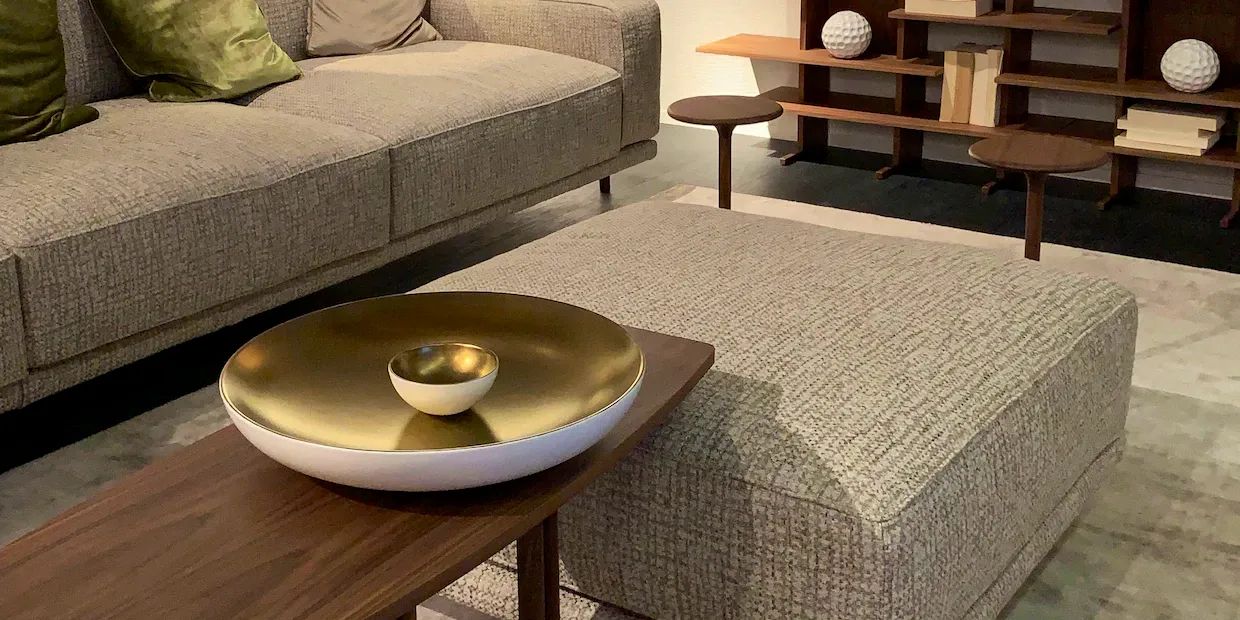
An ottoman is one of the hardest-working pieces of furniture you can own, and it looks right at home in both the living room and the bedroom. It can be a footrest after a long day, a stand-in coffee table for your morning espresso, a bench at the end of the bed, or an extra seat when guests drop by. Before you buy one, though, a handful of decisions will make the difference between an ottoman that quietly disappears into the clutter and one that pulls your whole room together.
The first thing to settle is size. Your ottoman should be big enough to do its job without crowding the room or blocking traffic. If you want it to earn its keep as storage, look for a hinged or lift-up lid. And if you plan to actually sit on it, prioritize a soft, cushioned top that's comfortable underneath you.
Next, coordinate it with the room's design. In a contemporary, minimalist space, a clean-lined ottoman keeps things sleek. In a more traditional or eclectic room, an ottoman with extra charm and character feels right at home. Color matters, too: take stock of the hues and textures already in your space first. Against a mostly neutral backdrop, a deep or dark ottoman can be a striking accent, while a lighter, brighter piece holds its own in a room that's already full of bold color.
Finally, think about your budget. Ottomans range from inexpensive (around $100) up to genuine investment pieces (well over $1,000), so pick one that fits comfortably within what you want to spend. Below we walk through how to choose, then share the six ottomans we keep coming back to.
How to choose the right ottoman
Start with size and purpose
Before anything else, decide what the ottoman is actually for, then size it accordingly. In the bedroom, choose an ottoman or bench that's the same width as your bed or a little smaller; matching the proportions gives the space a unified, intentional look. In the living room, if your sofa only seats two, pick an ottoman that's smaller than the couch so the arrangement doesn't feel lopsided. A piece like our top pick, the Modway Amour round ottoman, slots neatly in front of a loveseat without overwhelming it.
Match the build to the job
The way an ottoman is constructed should follow how you'll use it:
- As seating, look for a soft, well-cushioned top you'll actually want to sit on.
- As a table, choose a flat, smooth, supportive surface that can hold a tray, books, or a drink.
- As storage, look for a deep interior with a lid so you can stash blankets, pillows, and odds and ends out of sight.
Coordinate the style and color
Let the room lead. A modern space calls for simple, clean lines; a traditional or eclectic room can carry a more decorative, textured piece. For color, work with what's already there. If you want the ottoman to read as a polished anchor rather than a clashing afterthought, a richly upholstered option like the Chestnut distressed vegan leather ottoman brings warmth that plays well with almost any palette.
Quick tip
If you can only buy one ottoman, choose a lift-top storage model. You get a footrest, an occasional seat, a tray table, and a hidden home for blankets and remotes all in a single piece, which is the best value square foot in most living rooms.
Avoid these common mistakes
A few missteps come up again and again:
- Going too big. An oversized ottoman crowds walkways and throws off the balance of a small seating group.
- Forgetting storage you'll want later. If you're short on space, skipping a lift-top model is a missed opportunity.
- Ignoring height. An ottoman that's much taller or shorter than your sofa seat looks awkward as a footrest. Aim to roughly match the seat height.
Our favorite ottomans
Now that you know what to look for, here are the six ottomans we recommend, starting with the one we'd buy first.

Upholstered in a richly button-tufted fabric over a thick foam cushion, this round ottoman brings an opulent look and a genuinely comfortable seat. Non-marking black plastic legs keep your floors safe.
✓ What works
Plush, deeply tufted top that's comfortable to sit on; non-marking legs; works as a footrest, magazine shelf, or accent piece.
✕ Watch for
No interior storage, so it's purely decorative and for seating.
We love the Modway Amour because it nails the thing most decorative ottomans get wrong: it's genuinely comfortable. The deep button tufting and thick foam cushion make it a real seat, not just a prop, and the non-marking black legs keep your floors scratch-free. Use it as a footrest, a soft perch, or a spot for your favorite stack of magazines. It's an easy companion to a cozy reading setup, like the one in our accent chairs guide.

Distressed vegan leather gives this tufted ottoman a worn-in, classic look, and it's upholstered by trained hands on handcrafted benches. At 17.5 inches tall, it sits at the perfect height beside most sofas.
✓ What works
Handcrafted, expert upholstery; 17.5" height pairs well with most living room furniture; doubles as a footstool or coffee table.
✕ Watch for
The traditional distressed-leather look won't suit every modern scheme.
For a more traditional, lived-in look, the Harrison's tidy storage aside, the Chestnut distressed vegan leather ottoman is hard to beat. It's upholstered by trained hands on handcrafted benches, and at 17.5 inches tall it sits at just the right height to double as a coffee table or footstool next to most living room furniture.
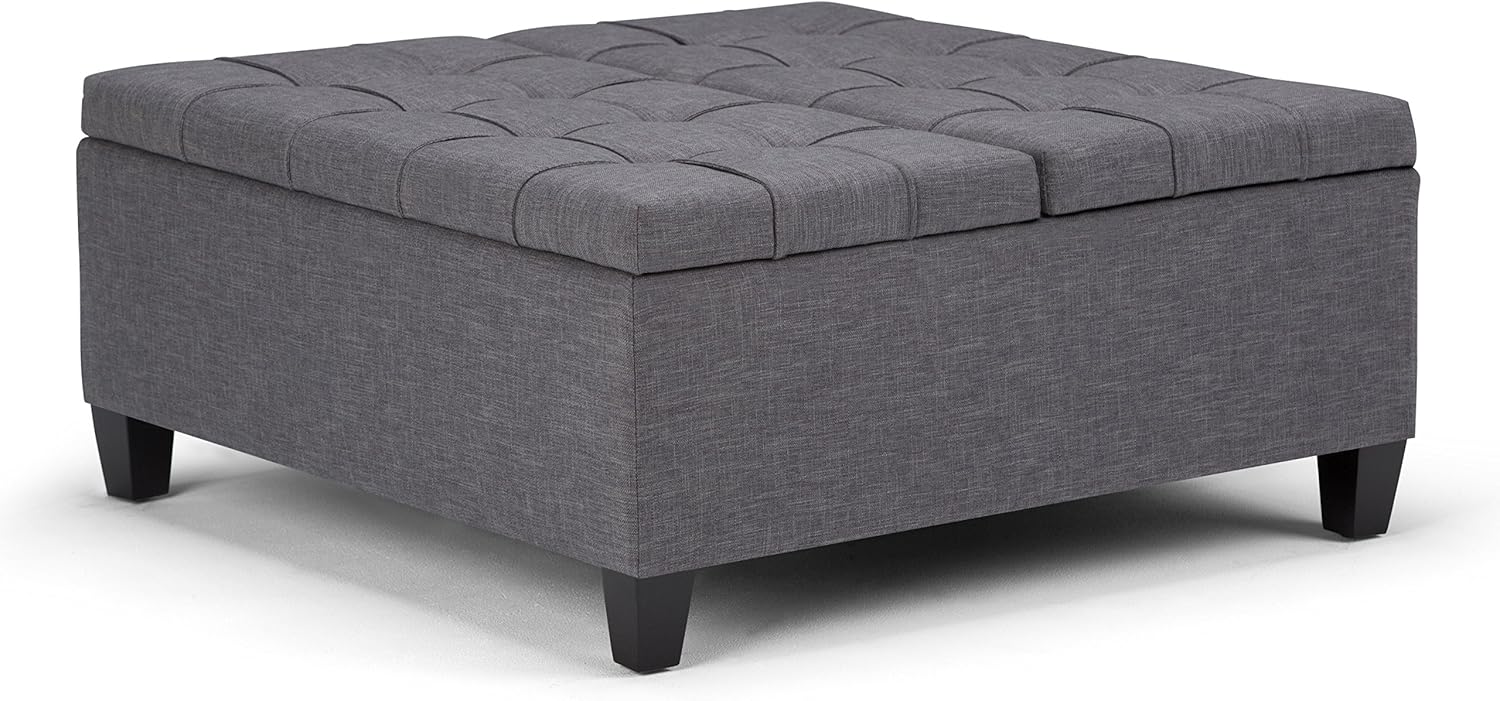
A roomy 36-inch square with a split lift top that pulls up for easy access to a spacious interior. The slate-grey tufted linen-look fabric is offered in several colors and upholstery options.
✓ What works
Generous interior storage; split top with chic tufted accents; multiple color and upholstery choices.
✕ Watch for
At 36 inches square it needs a fair amount of floor space.
Need real storage? The SIMPLIHOME Harrison is a generous 36-inch square with a split lift top that pulls up for easy access to a spacious interior. The slate-grey tufted, linen-look fabric is calm and neutral, and it comes in several other colors and upholstery options if grey isn't your thing. It's a natural fit alongside the relaxed pieces in our farmhouse dining room decor guide.

A 30-inch round ottoman that marries a soft, button-tufted, foam-filled top with a solid wood frame for real stability. A flip-up lid with built-in clasps reveals plenty of hidden storage.
✓ What works
Solid wood frame with anti-slip leg pads; high-rebound sponge fill; flip-up lid with secure clasps for storage.
✕ Watch for
The cushioned top is not detachable.
If you like a round silhouette with hidden storage, the HUIMO 30-inch round ottoman pairs a soft, button-tufted, foam-filled top with a solid wood frame and anti-slip leg pads for real stability. The flip-up lid has built-in clasps to hold it securely, so it's as practical as it is pretty.

Bonded leather in espresso gives this square ottoman a timeless, luxurious feel, and a lightweight lift-up top hides ample storage for throws, cushions, or kids' toys. Strong construction stands up to heavy use.
✓ What works
Plush cushioned top doubles as extra seating; roomy hidden storage; durable build with discreet, sturdy feet.
✕ Watch for
Bonded leather, while handsome, isn't full-grain leather.
For timeless luxury, the Christopher Knight Berkeley ottoman wraps a roomy storage interior in espresso bonded leather. The lightweight lift-up top makes it easy to stash throws, cushions, kids' toys, or serving trays, and the plush cushioned surface gives you extra seating in a pinch. Its strong construction is built to take heavy use, even a little kid play.

A glam waterfall-design velvet bench that adds soft seating wherever you need it: the foot of the bed, an entryway, or a living room. Gold metal legs screw in by hand for a quick, sturdy setup.
✓ What works
Versatile bench for living room, entryway, or end of bed; soft velvet upholstery; sturdy, easy-to-attach gold legs.
✕ Watch for
It's an open bench, so there's no enclosed storage.
Finally, on a budget, the Furnimart velvet bench brings a glam, waterfall-design silhouette in soft grey velvet. Use it at the foot of the bed, in an entryway as a shoe-removing bench, or as extra living-room seating. The gold metal legs simply screw into each corner with the provided hardware, so setup takes minutes.
Quick comparison: our top three
Luxurious Tufted Round Ottoman
Upholstered in a richly button-tufted fabric over a thick foam cushion, this round ottoman brings an opulent look and a genuinely comfortable seat. Non-marking black plastic legs keep your floors safe.
View on Amazon→Chestnut Distressed Vegan Leather Traditional Tufted Ottoman
Distressed vegan leather gives this tufted ottoman a worn-in, classic look, and it's upholstered by trained hands on handcrafted benches. At 17.5 inches tall, it sits at the perfect height beside most sofas.
View on Amazon→Harrison Lift-Top Storage Ottoman
A roomy 36-inch square with a split lift top that pulls up for easy access to a spacious interior. The slate-grey tufted linen-look fabric is offered in several colors and upholstery options.
View on Amazon→Frequently asked questions
How do I pick the right ottoman for my bedroom or living room?
Three things should drive the decision: the size of the space, the ottoman's purpose, and the materials it's made from. In the bedroom, choose an ottoman the same size as the bed or smaller for a unified look, with a soft cushion if you'll sit on it and a lidded interior if you need storage. In the living room, if your sofa only seats two, pick an ottoman smaller than the couch so the arrangement stays balanced. From there, match the construction to the job: a smooth top for table use, a deep well for storage, a plush cushion for seating.
Where should I put an ottoman in my home?
The living room is usually the ideal spot. You can place it front and center as a focal point, or use it as a flexible, temporary coffee table that's easy to slide out of the way when you need extra room. It also shines at the end of a bed or just inside an entryway.
Can one ottoman do more than one job?
Absolutely, and the best ones do. A lift-top model works as a footrest, a tray table, an occasional seat, and hidden storage all at once. Look for a sturdy frame and a comfortable cushioned top and you'll get years of versatile use out of a single piece.
Once you've found the right ottoman, finish the room with the pieces that make it feel like yours: a stylish area rug to anchor the seating, a statement floor lamp for warm evening light, and a decorative mirror to bounce that light around the space.
The Author
About the author
Interior Designer
Donald Martin
Designer since 2006 and a lifelong lover of rescued objects, Donald Martin knows how to give a second life to pieces and weave them into an eclectic, personalized interior. He writes about decorating real homes on a real budget.