Rugs · 12 min read
Rug Materials Compared: Wool, Jute, Cotton and Synthetics
 Donald Martin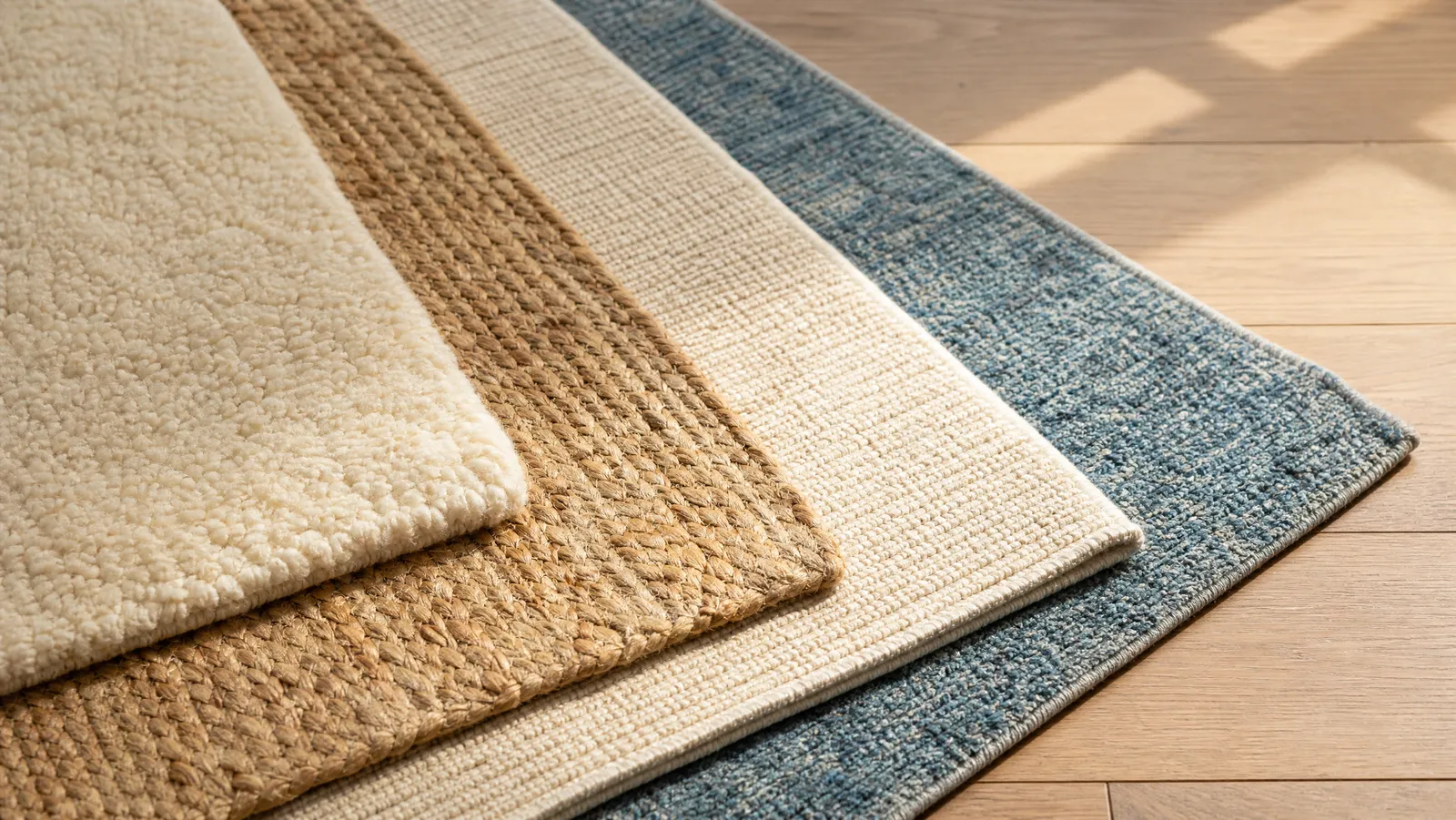
The best rug material depends on the room. Wool is the pick for longevity and feel, polypropylene for spills, pets and tight budgets, jute and other plant fibers for texture in dry rooms, and cotton for cheap, casual, often washable softness. There is no single winner — only good and bad matches.
That is the short answer, and the rest of this guide is the evidence. Material is the decision that sets almost everything you will live with: how the rug feels barefoot, how it handles a spilled glass of red, how many years it lasts, and what it costs up front versus per year of use. In our guide to how to choose an area rug, we put material second only to size in the buying order — get those two right and the pattern hunt becomes the fun part instead of a trap.
Below we compare the five rug materials that cover nearly every rug worth buying: wool, cotton, the jute family, polypropylene and polyester. For each one we cover feel, durability, stain behavior, cleaning, price band and the rooms where it belongs. Then we settle the wool vs synthetic question head-to-head and match a material to every room in the house.
Wool Rugs: The Benchmark for Every Other Material
Every rug material comparison starts with wool, because wool is the standard the others are measured against. According to Carpet Exchange's rug materials guide, wool is the benchmark for durability among rug fibers, and it can last decades with reasonable care.
Feel. Dense, springy and warm underfoot. Wool pile compresses and recovers, which is why a good wool rug still looks full years after a synthetic in the same spot has flattened.
Durability. This is wool's headline act. According to Rug Love, a high-quality wool rug can last anywhere from 20 to 50 years or more, helped along by regular gentle vacuuming, rotating the rug every six months for even wear, and a professional clean every two to five years. Buy one good wool rug in your thirties and it can plausibly outlive your mortgage.
Stain behavior. Wool's natural oils, chiefly lanolin, give it a built-in resistance to dirt and water-based spills — liquid tends to sit up long enough to blot. It is not invincible: it absorbs moisture more readily than plastic fibers, so a soaked wool rug needs prompt, thorough drying.
Cleaning. Vacuum regularly with the beater bar off or on a low setting, blot spills fast, and leave deep cleaning to a professional. Harsh alkaline cleaners and hot water can damage the fiber, so skip the supermarket carpet shampoo.
Price band. The most expensive mainstream option. According to RugKnots, a comparable 8x10 wool rug starts around 400 to 700 dollars machine-made, from about 800 dollars hand-tufted, and from about 1,500 dollars hand-knotted. That stings up front, but spread over a multi-decade life the per-year cost often beats cheaper fibers you replace twice.
Best rooms. Living rooms, bedrooms, dining rooms — anywhere you want one rug to serve for the long haul. Know the trade-offs: new wool rugs shed loose fiber for the first few months (vacuum it away, it stops), and wool is the wrong buy if you expect to redecorate in three years.
Cotton Rugs: Cheap, Casual and Often Washable
Cotton is wool's low-commitment cousin: a natural fiber that is soft, flat-woven or low-pile, and cheap enough to treat as seasonal decor.
Feel. Soft and lightweight, usually in a flat weave rather than a plush pile. Comfortable barefoot but with none of wool's cushion.
Durability. Modest. According to Carpet Exchange, cotton is the affordable natural fiber, but it fades and wears faster than wool, which is why it suits spots where you may replace the rug regularly. Expect a handful of years in real traffic, not decades.
Stain behavior. Cotton absorbs liquid quickly — the same property that makes your towels work makes cotton rugs stain fast. The saving grace is what comes next.
Cleaning. Many smaller cotton rugs, roughly 2x3 through 5x7 flat weaves, are machine washable, which resets the whole stain conversation. When a rug can go through the washer, a juice spill is an errand instead of an incident.
Price band. The cheapest natural fiber; small cotton flat weaves are commonly found for under $100.
Best rooms. Kitchens, kids' rooms, bathrooms, casual layered looks. Know the trade-off: cotton is a refreshable rug, not a forever rug — buy it for flexibility, not heirloom value.
Jute Rug Pros and Cons (Plus Sisal and Seagrass)
The plant-fiber family — jute, sisal, seagrass — sells on texture. Nothing else gives a room that nubby, organic, sisal-and-linen designer look for so little money. It also comes with one hard rule: keep it dry.
According to Australian retailer Rug.com.au, jute fibers are susceptible to mold and mildew that can break the fibers down, and moisture releases the natural oils within the rug, staining it a dark brown color. The same guide warns against jute in wet or humid spaces such as bathrooms, kitchens and laundries, and against covered patios where rain can reach.
The honest jute rug pros and cons list:
Pros:
- Texture and looks. Instant organic warmth; the default rug of coastal, farmhouse and Scandinavian rooms.
- Price. More affordable than wool for the same footprint — large natural-fiber rugs are among the cheapest big rugs you can buy.
- Sustainability. Fast-growing plant fibers, biodegradable, minimal processing.
- Layering. A flat jute base under a smaller wool or cotton rug is a classic designer move that stretches a budget.
Cons:
- Moisture is the enemy. Wet jute stains brown, weakens and can grow mildew, per Rug.com.au. No bathrooms, no kitchens, no damp basements, no uncovered doorways.
- Rough underfoot. Jute is the softest of the three; sisal and seagrass can feel outright scratchy. None are naptime-on-the-floor material.
- Sheds and sprouts. Loose fibers work free, and spot-cleaning is awkward because soaking the stain risks the water damage above.
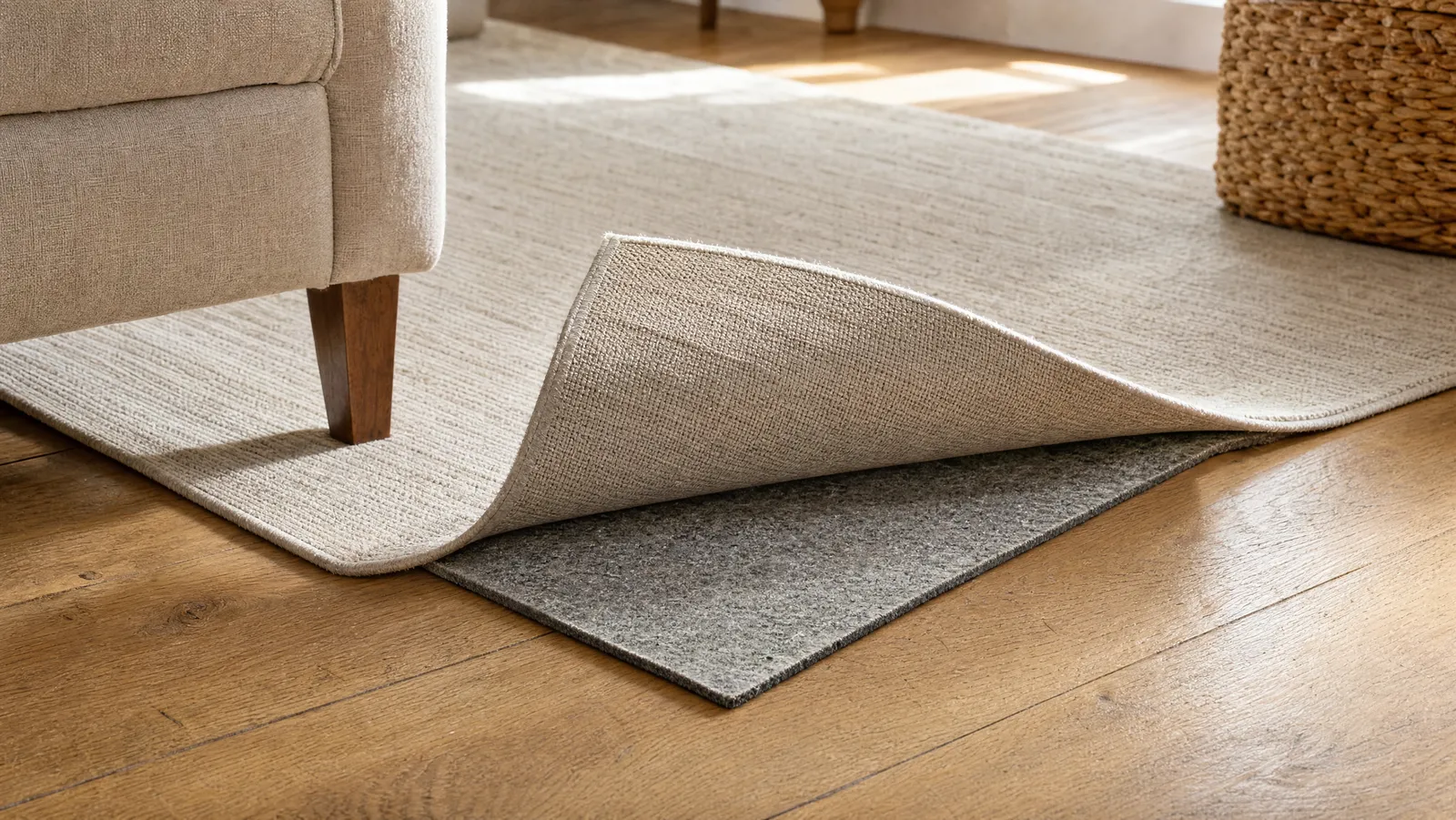
- Slippery weaves. Flat plant weaves shift on hard floors, so plan on a quality rug pad — natural rubber is the usual pick, and it also buffers hard flooring underneath.
Best rooms. Dry, moderate-traffic spaces: living rooms, bedrooms, home offices, hallways that do not open to the weather.
Polypropylene Rugs: The Budget and Spill Champion
Polypropylene — also sold as olefin — is the workhorse of the synthetic rug world and the reason a decent-looking 8x10 can cost less than a dinner out for four. If your household runs on toddlers, dogs and red sauce, this is the fiber engineered for your life.
Feel. Modern polypropylene is surprisingly soft, though thinner and less substantial than wool. Heat-set versions mimic wool's matte look convincingly from standing height.
Durability. Here is the honest part. According to Rugs Direct, polypropylene does not bounce back from pressure and crushing the way natural materials do, so years of heavy traffic leave permanent flattened paths. According to RugKnots, a polypropylene rug in a high-traffic area typically shows its age within 3 to 5 years.
Stain behavior. Excellent against almost everything water-based. Polypropylene is hydrophobic — the fiber does not absorb liquid, so wine, juice and pet accidents sit on the surface waiting to be blotted, and the color is locked in during manufacturing so it will not bleach out with cleaning. The weakness is oil: according to Rugs Direct, the material is stain resistant but not oil resistant, and oil-based stains — including oils from bare skin, which can slowly yellow the fiber — are difficult to remove.
Cleaning. The easiest of any fiber. Vacuum freely, blot spills, and most polypropylene rugs tolerate a hose-down outdoors. This forgiveness is why the fiber dominates indoor-outdoor rugs.
Price band. The budget king. According to RugKnots, a decent polypropylene 8x10 area rug starts around 150 to 300 dollars — roughly a fifth the entry price of hand-tufted wool at the same size.
Best rooms. Kids' rooms, playrooms, entries, mudrooms, dining rooms, patios, rentals. Know the trade-off: you are pre-paying for a replacement in five-ish years. In high-traffic rooms, treat polypropylene as a consumable, not an investment.
Polyester Rugs: Soft, Vivid, With One Weakness
Polyester is the other big synthetic, and it competes on two things polypropylene cannot match: softness and color. Polyester takes dye exceptionally well, which is why the most saturated, detailed budget rugs — and most machine-washable rugs — are polyester or recycled polyester (PET).
Feel. The softest budget fiber, often silky. In thicker piles that softness fades as the fiber crushes.
Durability. Similar story to polypropylene: fine in medium traffic, but according to Italian rug house Nodus, polyester rugs can lose volume over time as they flatten and the fibers become less soft — a problem that mainly affects taller piles and is much less pronounced in thin, flat weaves.
Stain behavior. Strong against water-based spills — coffee or wine can usually be absorbed and washed out with water and mild detergent, per Nodus. The weakness is the same as polypropylene but worse: Nodus notes that oily substances can penetrate the fibers and cause permanent stains or color loss. Salad dressing is this fiber's natural predator.
Cleaning. Easy at home, and this is the fiber behind the washable-rug boom — thin polyester constructions are designed to fold into a residential washing machine. Cleaning needs differ enough by fiber that we wrote a full room-by-room walkthrough in our guide to how to clean an area rug, from blotting technique to which fibers tolerate wet cleaning at all.
Price band. Comparable to polypropylene; most polyester 8x10 rugs sit in the low hundreds of dollars.
Best rooms. Bedrooms and low-to-medium-traffic living spaces where softness and color matter; kids' rooms in washable form. Know the trade-off: vivid and soft on day one, but keep it away from oil and expect tall piles to mat.
Wool vs Synthetic Rug: The Head-to-Head
The wool vs synthetic rug decision is really a time-horizon decision. Here is the honest scorecard:
- Upfront price: synthetics, easily. Per RugKnots, 150 to 300 dollars for a decent synthetic 8x10 versus 400 dollars and up for entry-level wool.
- Lifespan: wool, easily. According to RugKnots, polypropylene in a high-traffic spot shows its age in 3 to 5 years, while comparable wool looks good for 10 to 15 in the same location — and per Rug Love, a high-quality wool rug can run 20 to 50 years.
- Cost per year: usually wool. A 600 dollar wool rug over 15 years costs about 40 dollars a year; a 250 dollar synthetic replaced every 5 years costs about 50 — and that is before the synthetic's second replacement.
- Spill resistance: synthetics. Hydrophobic fibers plus locked-in color mean you can clean aggressively without fear.
- Feel and looks over time: wool. Springy pile that recovers instead of matting.
- Low-stakes flexibility: synthetics. Trend colors, rentals, rooms in flux, and anywhere you would rather not think about the rug.
Our rule: buy wool for the rooms you plan to keep, and synthetics for the rooms that are hard on rugs or still figuring themselves out.
The Best Rug Material for Every Room
Match the fiber to the traffic and the spill risk, and most rug regret disappears.
- Living room. The best rug material for a living room is wool if it is your long-term family hub — the recovery and lifespan justify the spend. Busy household with young kids or big dogs? Polypropylene now, wool when the chaos subsides. Jute works in dry, adults-mostly living rooms, especially layered.
- Bedroom. Low traffic, bare feet, low spill risk: this is where wool or a soft polyester shines. Plant fibers are safe here too if you do not mind the texture at 6 a.m.
- Dining room. Food falls. Polypropylene is the sane choice; flat-woven wool works if you blot fast. Keep jute out — dropped liquids and plant fiber end badly.
- Kitchen and entry. Moisture, grit and grease: washable cotton or polyester in the kitchen, polypropylene at the door. Never jute, per the moisture warnings above. On hardwood floors especially, add a quality rug pad to stop sliding and protect the finish — we will cover pads and hard-floor pairings in upcoming guides.
- Kids' rooms and pet zones. Polypropylene or washable polyester. Stain forgiveness beats every other virtue here, and the 3-to-5-year lifespan conveniently matches how fast kids outgrow rooms.
Quick Verdicts: Which Rug Material Should You Buy?
- Buy wool if: you want one rug for a decade or more, you value feel, and the budget allows. The benchmark, still.
- Buy cotton if: you want cheap, washable and casual, and you are fine replacing it in a few years.
- Buy jute, sisal or seagrass if: you want maximum texture per dollar in a dry, moderate-traffic room — and never in a bathroom or kitchen.
- Buy polypropylene if: spills, pets, kids or budget top your list and you accept a 3-to-5-year prime in busy rooms.
- Buy polyester if: you want the softest, most colorful budget option or a machine-washable rug, and you can keep oil away from it.
The Bottom Line
Rug materials are not good or bad — they are priced honestly for what they do. Wool costs the most because it quietly outlasts everything; synthetics cost the least because they are engineered to shrug off the years that would ruin something precious; plant fibers trade water resistance for texture; cotton trades longevity for a trip through the washing machine. Decide how long the rug needs to live and what it needs to survive, and the fiber picks itself. Material is one decision of several, though — size, placement and padding matter just as much, and our full guide to choosing the right rug walks all of them in order, so your next rug is the one you stop thinking about for years.
The Author
About the author
Interior Designer
Donald Martin
Designer since 2006 and a lifelong lover of rescued objects, Donald Martin knows how to give a second life to pieces and weave them into an eclectic, personalized interior. He writes about decorating real homes on a real budget.